

Why Technical SEO Still Matters

Technical SEO is the set of optimizations to a website's infrastructure that makes sure search engines can crawl, index, and interpret its pages without errors. In simple terms, it's like making sure a house's foundation and wiring are flawless so the lights turn on and visitors can walk in without obstacles.
This pillar is essential for business owners, developers, and marketing professionals who want scale and digital reliability. Understanding why technical SEO still matters makes complete sense when your website is slow or isn't showing up in search even with good copy. It solves the communication problem between your server and Google's crawler, turning a confusing website into a high-performance platform ready to convert.
- What does it do? It removes technical barriers, such as broken links and slow code.
- How does it work? Through server adjustments, image compression, HTTPS, and structured data.
- When should you use it? Always, especially during launches, migrations, and traffic drops.
- How much does it involve? Ongoing monitoring and periodic audits.
- Where does it apply? Across the website's entire invisible structure.
To understand why technical SEO still matters, you need to look at how algorithms have evolved. Today, Google and generative AI tools evaluate the full user experience. A slow website, or one with confusing URLs, conveys low quality, even with good content.
Processes like JavaScript rendering and crawl budget management determine how often Google visits your website. If the technical side fails, the crawler abandons your page before it ever reads your best article. At WebMARFAN, technology always serves the narrative, making the technical foundation the first step toward digital authority.
What is technical SEO in the age of artificial intelligence?
Images created with AI for illustration purposes only
Technical SEO has evolved. It used to be limited to sitemaps and basic tags. Today, it provides clarity for AI systems that synthesize information. Through structured data (Schema Markup), you tell Google what's a price, an author, a service, or an FAQ.
Without that technical translation, AI can misinterpret your content or ignore it altogether. Reliability starts with HTTPS, a valid SSL certificate, and secure browsing. A technically flawless website is one Google feels confident recommending.

How does performance optimization work for the user?

Images created with AI for illustration purposes only
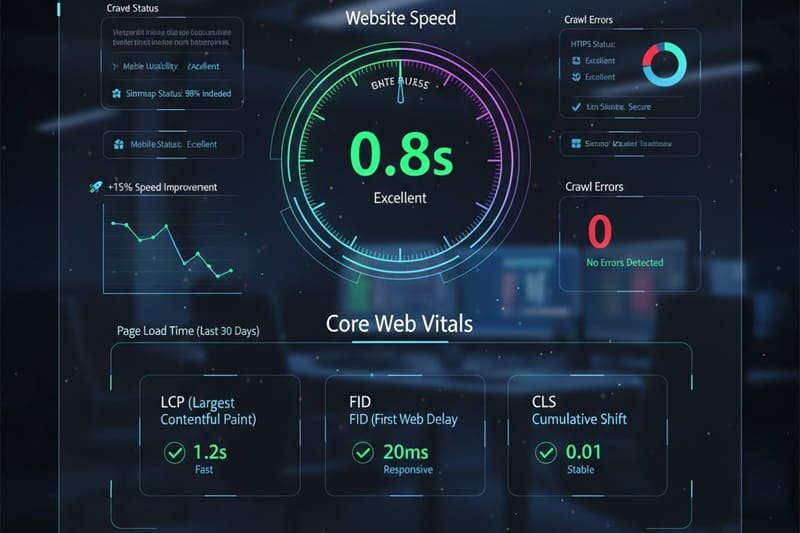
Technical optimization focuses on Core Web Vitals, metrics that assess loading, visual stability, and interactivity. Understanding why technical SEO still matters means understanding user patience: more than half of visitors abandon slow websites.
This process includes script minification, lazy loading, image optimization, and CDN use. When these gears work together, your brand's perceived value grows. At WebMARFAN, speed is a requirement, not a differentiator.
Where do data hierarchy and crawlability apply?

Images created with AI for illustration purposes only
The practical application of technical SEO happens in information architecture. Friendly URLs and well-structured internal links let authority flow correctly between pages.
Managing canonical tags prevents duplication, which Google's AI treats as noise. By eliminating these technical obstacles, only the best version of your message gets indexed, sustaining consistent results.
Conclusion
Technical SEO still matters because it's the language computers use to validate your content. Without speed, security, and organization, even the best copy remains invisible.
Technique doesn't replace the human element, it amplifies it. At WebMARFAN, we turn slow websites into conversion machines, combining code, strategy, and real experience.
Strengthening your authority starts in the code and ends with customer satisfaction. Don't let invisible flaws limit your brand's growth.