
The Future of SEO and the Impact of Artificial Intelligence

The evolution of SEO as artificial intelligence intensifies
Digital transformation accelerated by artificial intelligence is profoundly changing how we create content, run analysis, and interpret user behavior. By 2026, the SEO market won't be the same, and this isn't just a trend — it's a shift already confirmed by official sources like Google Search Central, Ahrefs, HubSpot, and analysis from Search Engine Journal.
As we move forward, it's becoming clear that AI won't replace SEO, but it will redefine the rules, metrics, and priorities. And whoever gets ahead of this SEO optimization landscape will have a real competitive advantage.

How AI is redefining SEO in 2026
Since 2023, Google has been running official tests with the Search Generative Experience (SGE), signaling that the search engine is moving toward a hybrid model: traditional results combined with AI-generated answers. By 2025, specialists like Danny Sullivan and John Mueller had reinforced that the focus will remain on user experience, content quality, and semantic clarity, but now with algorithms more sensitive to the context of SEO optimization.
This shift creates a clear change:
- AI now interprets intent, not just keywords.
- Pages need to deliver complete, trustworthy answers.
- Content will need to be more human, more in-depth, and more useful.
- Traditional metrics will be complemented by experience indicators.
Human content remains a priority
Even with automation tools, 2026 content will need to show:
- A natural, clear, emotionally resonant narrative;
- Legitimate, verifiable sources;
- An organized structure with lists, topics, and semantic hierarchy;
- A demonstration of real experience (E-E-A-T).
Sources like the Google Search Quality Rater Guidelines reinforce that shallow content will be easy to spot. Because of that, whoever delivers complete answers using SEO with depth and context gets ahead.

New metrics that matter for SEO in 2026
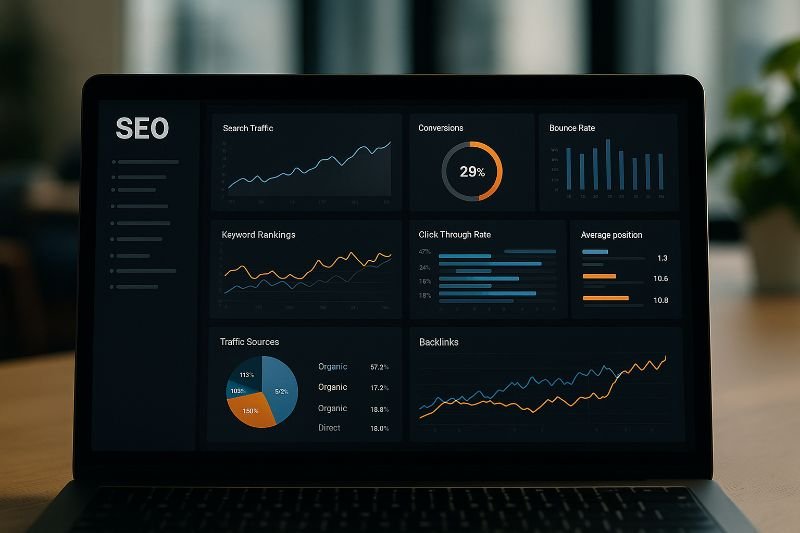
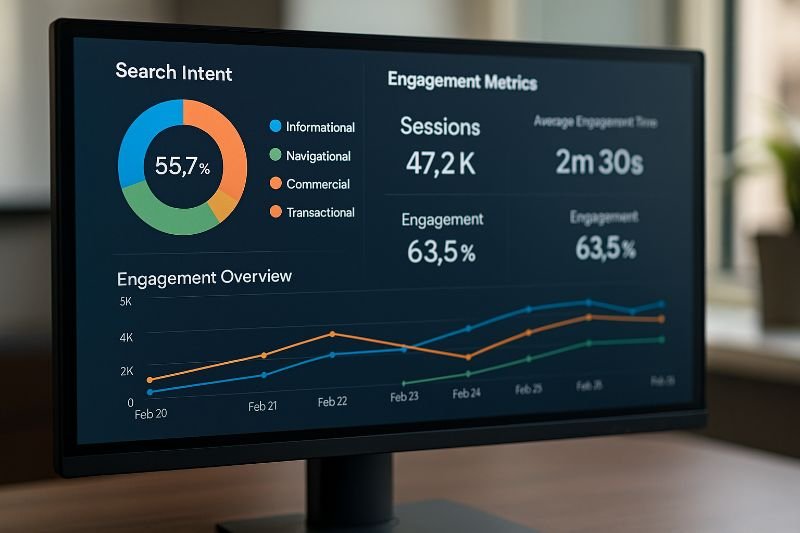
Traditional reports (clicks, impressions, CTR) are still relevant, but now SEO also needs to measure:
A signal Google watches to determine whether the answer meets the search intent.
- The clearer, more validated, and more objective, the better.
Metrics related to reading time, navigation across topics, and interaction with relevant page elements.
AI measures the relationship between subheadings, paragraphs, and contextual terms.
In 2026, the author's real experience will matter even more.
Content needs to be structured so generative engines can:
- Extract complete answers;
- Reproduce information clearly;
- Understand the user's intent.
Technical SEO will matter even more
With AI evaluating experience and performance, technical SEO becomes even more important:
- Load speed (revised Core Web Vitals);
- Clean, noise-free HTML structure;
- Structured data for generative AI;
- Smart internal linking;
- Digital accessibility;
- A definitive mobile-first approach.
This combination lets content be easily interpreted by both Google and generative models.

How to prepare for SEO in 2026
To get ahead of the curve, businesses and professionals should focus on three pillars:
Based on real data, hands-on experience, and verifiable sources.
Pages with well-organized headings, lists, short paragraphs, and semantic clarity.
Optimized performance, smooth navigation, and architecture designed for both search engines and users.
Beyond that, best practices recommended by institutions like W3C, Google Developers, and Moz help ensure professional website design that's aligned with future requirements.
Conclusion
A new era of SEO guided by humanity and strategy
The future of SEO in 2026 won't be just technical — it'll be emotional, strategic, and deeply human. AI redefines metrics, but it doesn't eliminate the need for authentic content, real experience, and narrative clarity. Whoever understands that combination now will be ahead of the curve.
This shift reinforces the need for professionals who can combine advanced SEO strategies, a deep understanding of search intent, and authentic content production — elements artificial intelligence can't replace. To explore complete solutions ready for the new digital landscape, visit our professional website design page and see how to strengthen your online presence for SEO in 2026.