

Traditional SEO Still Matters for AI Mode and AI Overviews

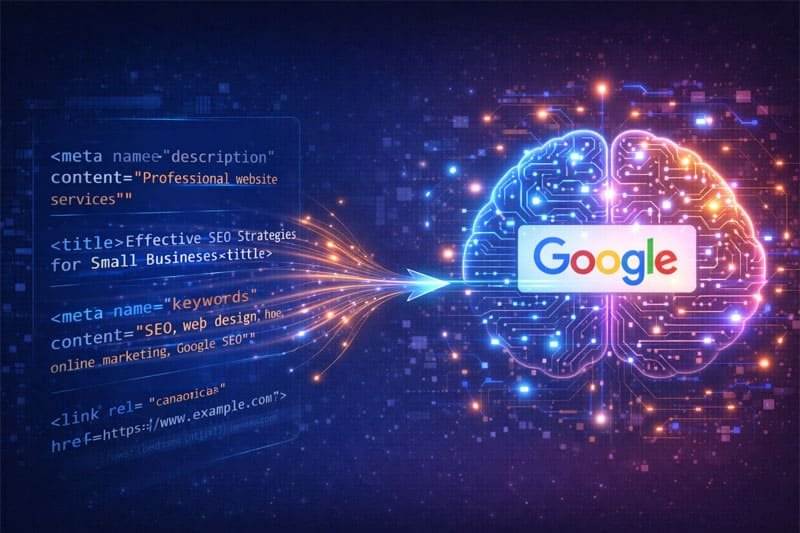
Traditional SEO still matters for AI Mode and AI Overviews because artificial intelligence doesn't create facts; it synthesizes information pulled from trustworthy sources. For Google to present your website as a definitive answer, it needs to find well-structured data, fast loading, and a flawless content hierarchy. Without that technical foundation, your brand simply doesn't supply the fuel generative algorithms need.
This article is essential for marketing managers, business owners, and specialists who feel the uncertainty of constant algorithm changes. It solves the problem of declining organic visibility by showing that the path forward runs through excellence in what we already know. When you optimize for humans, AI understands your content is the best solution to the user's problem.
- Technical Foundation: AI depends on traditional crawling to discover and index your content.
- Authority (E-E-A-T): Trust signals, like external links and mentions, confirm to AI that your source is reliable.
- Structured Data: Using Schema Markup acts as a translator, helping AI understand your page's exact context.
- Semantic Clarity: Direct paragraphs and objective answers make it easier to extract snippets for Google's summaries.
- Click Continuity: Classic SEO makes sure that, even after the AI answer, the user still feels the need to click through and go deeper on your website.
The symbiosis between classic SEO and Google AI Overviews
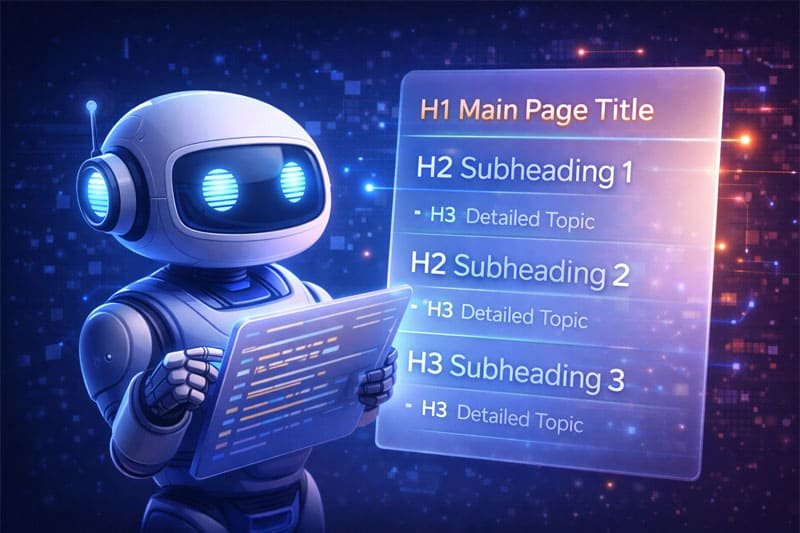
Many people believe artificial intelligence made technical SEO obsolete, but the reality is the opposite. Traditional SEO still matters for AI Mode and AI Overviews because Google uses the index it already has to feed its language models. If your website has a confusing information architecture or generic title tags, AI will struggle to synthesize what you offer.
Think of traditional SEO as the skeleton and AI Overviews as the skin. Without a solid bone structure, the outer appearance collapses. Speed, readability, and internal linking optimization practices let the generative engine navigate your domain efficiently, picking out the most relevant parts to answer users' complex questions.
Why does AI need your content structured?
AI looks for patterns. When you use lists, tables, and short paragraphs, you're making the algorithm's job easier. Structured data (Schema) provides context AI often can't infer on its own, like prices, reviews, and real authors.

The role of E-E-A-T in validating generative answers

Google has both an ethical and a commercial commitment to accurate information. The concept of E-E-A-T (Experience, Expertise, Authoritativeness, and Trust) has become the main filter against machine-generated spam. At WebMARFAN, we've observed that websites with real authors and a consistent publishing history get priority in AI citations.
For AI Mode, having the right keyword isn't enough. You need to prove that information comes from a trustworthy source. If your article solves a real customer problem, cite practical cases. AI values "Experience" (the first E in the acronym) precisely because it's something AI itself doesn't natively have.
Experience and expertise as competitive differentiators
Humanized content that narrates real experiences and lessons learned is impossible for algorithms to replicate perfectly. By focusing on specifics from your industry, you become an authority AI "wants" to cite to lend credibility to its own answer.
GEO and AEO strategies: Beyond keywords
While classic SEO focuses on rankings, GEO (Generative Engine Optimization) and AEO (Answer Engine Optimization) focus on being the solution. Traditional SEO still matters for AI Mode and AI Overviews in these cases too, because the textual clarity required by tools like YoastSEO, for example, is the same clarity that lets AI turn your paragraph into a voice snippet or a top-of-page summary.
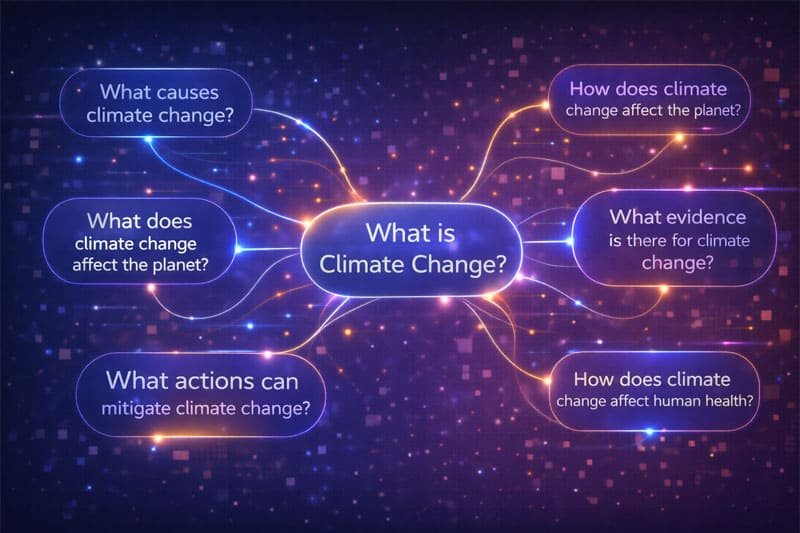
The Query Fan-Out technique comes in here as a semantic expansion. Instead of optimizing just for "how to do SEO," you should also cover "why do it," "what are the common mistakes," and "what's the return on investment." This creates an ecosystem of answers that surrounds the user at every stage of their search journey.
How Query Fan-Out expands your visibility across the web
By anticipating your reader's follow-up pain points and questions, you position yourself not just as a page, but as a knowledge hub. This increases time on page and lowers the bounce rate, sending positive signals back to the traditional algorithm.
The future of search: Where WebMARFAN sees opportunities
The future isn't a choice between AI or humans, but the integration of both. Google will keep rewarding brands that invest in technical quality and analytical depth. At WebMARFAN, we believe the biggest opportunity lies in personalization. Websites with SEO optimization that answer in a unique, authentic way will be the big winners.
Classic SEO makes sure you get found; AI makes sure you get summarized; and your humanized content makes sure you get chosen for that final click. Keeping that balance is what separates fleeting brands from lasting authorities in the digital market.
Conclusion
In short, the rise of AI Mode and AI Overviews doesn't cancel out the fundamentals of traditional SEO; it raises them to a new standard. Technical structure, brand authority, and clarity of intent remain the pillars that support any successful Google strategy.
To dominate search results, your business needs a solid foundation that serves both crawlers and people. The convergence between the technical and the emotional is the edge that will bring real results in 2026 and beyond.
Ready to turn your website into an authority Google AI can cite? Count on WebMARFAN's experience to guide your strategy toward organic leadership.