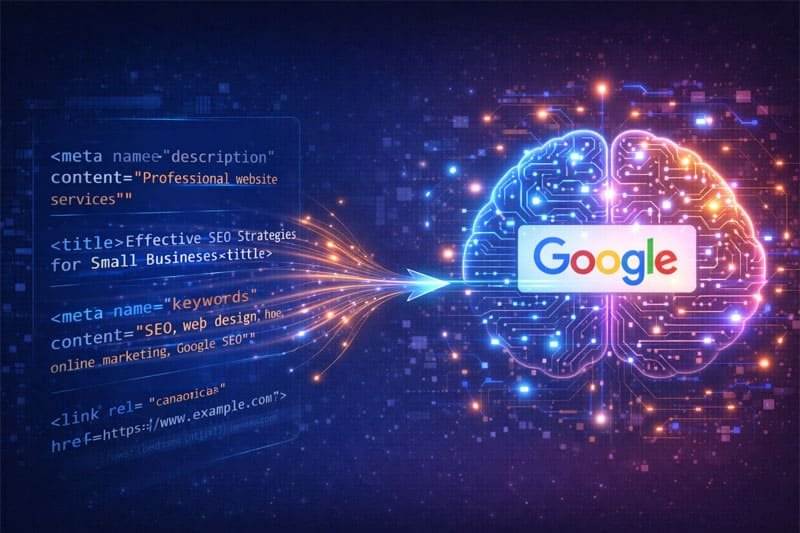


The Truth About Artificial Intelligence (AI) in SEO

SEO with AI: The truth businesses need to know
The truth about artificial intelligence (AI) in SEO is simple: it didn't destroy the field, but it changed the game. SEO is still alive, relevant, and necessary. What changed is how people search, how Google delivers answers, and how brands need to structure content to be found, understood, and cited. Today, it's not enough to think only about organic rankings. You also need to think about presence in AI-generated answers, semantic clarity, and the trust perceived by algorithms and users. For businesses seeking consistent growth, combining professional SEO optimization with a solid digital structure has become an essential part of online positioning.
This topic is especially important for businesses, content creators, marketing professionals, website owners, and SEO specialists who want to keep generating visibility and business opportunities. It should be taken seriously whenever a project depends on organic traffic, digital authority, and lead generation. In practice, AI changes SEO's central problem: it used to be enough to compete for rankings; now, on top of that, you need to build content that's useful, trustworthy, and structured enough to get on the radar of generative engines and experiences like AI Overviews and AI Mode. That's why investing in professional website design and a well-planned foundation makes all the difference for competing in this new landscape.
What is it, and what does it do?
Artificial intelligence in SEO is the use of intelligent systems to interpret search intent, organize information, provide operational support, and influence how content is discovered, evaluated, and presented in search. It affects both the people producing content and the ones delivering answers to users.
How does it work, and how is it applied?
It works across several layers: semantic analysis, context understanding, quality assessment, summarized-answer generation, and source recommendation. On Google's side, this shows up in features like AI Overviews and AI Mode. On the brand side, it shows up in AI-assisted production, intent research, topic clustering, and optimization for generative engines.
When should you use it?
Whenever the goal is to improve content quality, speed up processes under human supervision, and prepare pages for more conversational search. AI doesn't replace strategy. It should come in as reinforcement, not as a shortcut to shallow content.
How much does it cost, or what does it involve?
The cost varies according to the project's maturity. In many cases, the biggest investment isn't in the tool, but in the ability to turn data into trustworthy content, real experience, good architecture, and constant updates. The strategic effort has grown more than the purely textual one.
Where does it apply?
It applies to blogs, service pages, e-commerce, institutional content, FAQs, local pages, knowledge bases, and comparison materials. It also applies to branding work, because a brand's perceived authority now has even more influence on its chances of being referenced by AI-assisted search environments.

Images created with AI for illustration purposes only
SEO isn't dead; it just got more demanding
A lot of people say AI killed SEO. That line grabs attention, but it doesn't describe reality. What actually happened was an evolution of the search engine. Google still prioritizes content that's useful, trustworthy, and made for people. Beyond that, using AI isn't the problem in itself. The real problem is publishing material with no value, no depth, and no strategic purpose. In this context, WebMARFAN works with a broader view, where technique, semantics, and user experience move together.
In practice, SEO got more selective. Now, weak pages tend to lose ground faster, while content with good organization, authority signals, and concrete experience gains more relevance. That's especially true for topics where the user wants reassurance, comparison, context, and clarity. The logic is simple: if an AI is going to summarize the topic, it needs to find sources that look stable, useful, and citable.
The role of E-E-A-T in this new phase
E-E-A-T remains at the center of the discussion because it helps separate content that's merely well written from content that's genuinely trustworthy. Experience, expertise, authoritativeness, and trust don't work like a magic button, but they help explain why some pages seem more worthy of reference than others. In a landscape of AI-generated answers, this has become even more important.
A business that shows practical experience, presents clear authorship, answers real questions, and maintains editorial consistency tends to build more strength than one that just replicates generic text. In other words, AI increased the value of well-directed human content.

From SEO to GEO and AEO: what really changed
The biggest change isn't the end of traditional SEO, but the expansion of its scope. Today, talking about organic performance without considering GEO and AEO already falls short in many projects. GEO, in short, is optimization for generative engines that synthesize answers. AEO, in turn, aims to structure content to answer questions clearly, objectively, and citably. To do that, having a strong foundation in local SEO and Google presence also strengthens the brand's authority.
This changes the way you write. Instead of producing just one long text to compete for rankings, the brand needs to create answer blocks, short definitions, strategic questions, in-depth content, and enough context for the page to be understood as a source. This shift speaks directly to the logic of language models and to the format of AI-driven search experiences.
Being found isn't enough; you need to be understood
In the past, the main focus was showing up. Now, besides showing up, content needs to be easily interpreted. That involves semantic structure, coherent headings, a useful FAQ, clear language, consistent information, and alignment between search intent and the answer delivered. A page that just repeats a keyword tends to lose relevance compared to a page that actually solves the user's question.
Search has become more conversational
AI-powered features favor longer, more complex, more refined questions. That means very shallow or overly generic content suffers more. On the other hand, pages that cover a topic in depth, with accessible language and progressive logic, gain an advantage. That's why projects with a well-structured SEO strategy tend to stand out more in this new search environment.

Images created with AI for illustration purposes only
AI's impact on organic traffic is real, but not the same for everyone
One of the most important points in this conversation is traffic. When AI summaries show up in search, the tendency is for some users to click less on traditional results. That doesn't mean every website will lose traffic the same way. The drop tends to be more noticeable for simple informational queries, where the answer fits into a quick summary. Searches with more commercial intent, local context, detailed comparison, or a need for human trust still leave important room for clicks.
So the problem isn't just having AI in the results, but relying too much on generic content that can be easily summarized. Businesses that invest in a professional website with a strategic structure manage to create pages that are more robust, useful, and resistant to this new search behavior.
Where strong opportunity still exists
There's real opportunity in service pages, opinion content, case studies, local pages, complex comparisons, material backed by first-hand experience, and content that requires specialized interpretation. AI helps with filtering, but it still relies on trustworthy sources and strong signals to safely go deeper into a topic.
The mistake of still producing content the way you did in 2021
The biggest mistake today is sticking to the same production logic from years ago: long texts, full of repetition, with no clear intent, no answer blocks, no proof of experience, and no brand differentiation. That kind of content might still get indexed, but it loses competitiveness in today's ecosystem.
Technical SEO is still mandatory, but it's no longer a differentiator on its own
Speed, mobile experience, crawlability, architecture, correct rendering, internal links, and good indexing remain essential. The point is that these factors work more as a baseline than as an isolated competitive advantage. In other words, technical SEO is still the ticket to play the game, but it's rarely the only factor that guarantees standing out in an AI-driven landscape.
At the same time, the strategic layer has gained weight. A recognizable brand, editorial consistency, frequent updates, topical depth, and external reputation all help content get interpreted as a reference. In this landscape, backlinks and qualified mentions remain relevant, because they reinforce trust and discoverability. Anyone looking to strengthen that foundation can combine quality content with WebMARFAN's integrated services, building a project that's better prepared for the present and future of search.
AI tools help, but they don't solve everything on their own
Platforms with features built for AI search show that the market has understood the shift. Even so, no tool replaces strategy, know-how, and reading intent. AI speeds up tasks. The specialist is still the one who sets the direction.

Images created with AI for illustration purposes only
The big truth: AI values authority, context, and experience even more
The most important conclusion is this: AI didn't eliminate the need for human content; it increased the value of content that's genuinely useful. The more automatic answers appear, the more important the source behind those answers becomes. This puts a spotlight on brands that manage to combine clarity, depth, proof of experience, and semantic organization.
Anyone who keeps treating SEO as simple keyword repetition tends to lose ground. Those who understand search as an ecosystem of discovery, interpretation, trust, and answers will have a better chance of growing. The new landscape demands smarter pages, but also more human ones. It demands good technique, but with context. It demands automation, but with serious review. And it demands brand presence, because being remembered and cited now matters as much as showing up first.
What businesses and specialists should do now
The safest path is to review existing content, identify weak pages, reinforce semantic entities, improve answer structure, dig deeper into strategic topics, and consolidate trust signals. It's also worth prioritizing topics with commercial intent, local authority, practical experience, and conversion potential. That combination tends to hold up better against the rise of automatic summaries than a purely informational, generic blog.
Conclusion
The truth about artificial intelligence (AI) in SEO is that it changed the logic of digital visibility, but it didn't make SEO obsolete. What got left behind was the shallow, repetitive, mechanical model. What's gaining strength now is content that solves real questions, conveys trust, organizes information well, and helps both the user and search engines understand the topic in depth.
For brands and businesses, the message is clear: the future doesn't belong to whoever publishes the most, but to whoever publishes the best. SEO, GEO, AEO, and E-E-A-T don't compete with each other. They complement each other. When this integration is done well, the website stops being just a digital storefront and starts acting as a recognized, trustworthy source, ready for the new search landscape.
If you want to adapt your website, articles, and service pages for this new AI-driven landscape, WebMARFAN can help build a complete, human strategy ready for rankings, citations, and conversion.