

How to Get Your Website on Google's First Page

The short answer for anyone who wants to understand how to get their website onto Google's first page is this: you need a technically healthy website, useful content, a good user experience, a focus on search intent, and a consistent SEO strategy. There's no reliable shortcut. What exists is well-directed work.
This topic matters because a lot of businesses invest in a website and later realize it isn't generating qualified visits, isn't receiving inquiries, and doesn't show up for the searches that matter most in their own market. In many cases, the problem isn't just the design, but a lack of structure, semantics, commercial clarity, and organic planning. This article was written for business owners, service providers, and managers who want to understand what really influences rankings and which decisions help a website become a real business asset.
What really gets a website to rank well on Google
When someone asks how to rank on Google's first page, they're usually looking for a straightforward solution. But rankings don't depend on a single tweak. They're the result of a set of factors working together.
Google tries to understand whether a page answers the user's question well. To do that, it evaluates signals such as content structure, page relevance, clarity of the topic, navigation quality, mobile compatibility, speed, domain authority, semantic context, and the practical usefulness of the published material.
SEO isn't just about keywords
A lot of people still think SEO means repeating a keyword over and over. That hasn't worked as a serious strategy for a long time. The keyword is still important, but it's only part of the equation.
For a page to have a real chance of competing, it needs to address the subject in depth, organize the content logically, and show the search engine that the material was created to solve a real need. That's why a good SEO strategy treats titles, headings, copy, images, internal links, site architecture, and reading experience as parts of the same system.
If your goal is to grow on a solid foundation, it's worth understanding how SEO optimization for businesses structures this process strategically, instead of treating SEO as a set of isolated tricks.
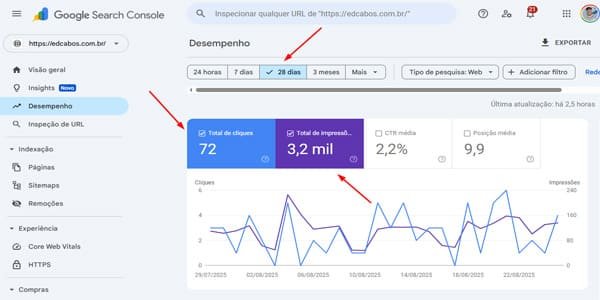
Images created with AI for illustration purposes only
What to do to rank on Google more consistently
Anyone researching what to do to rank on Google wants to move past theory and understand what needs to happen in practice. Below are the pillars that most influence that path.
Technical structure of the website
Before thinking about content, you need to check whether the website lets Google crawl and understand its pages correctly. That includes URL organization, coherent headings, load time, responsiveness, proper indexing, security, and clean code.
A website can have good copy and still perform poorly if it's badly organized technically. In many projects, rankings don't improve because the foundation doesn't support the growth.
Content aligned with search intent
There's no point writing a lot without answering what the user actually wants to know. A search like "how to get your website on Google's first page" calls for practical explanation, context, criteria, and guidance. If the page delivers generic text, it tends to lose relevance.
Good content isn't the longest. It's the one that best answers the question. That requires understanding the user's stage, the intent behind the search, and how deeply the topic should be covered.
Authority and trust
Beyond understanding the content, Google looks at trust signals. That comes through editorial consistency, website clarity, institutional information, domain quality, coherence between pages, and the brand's perceived relevance.
This is also where the role of an SEO specialist comes in, someone who can identify what's holding the website back and which actions should be prioritized based on the business's reality.
Practical table: what helps and what hurts your rankings
| Factor | Helps Rankings | Hurts Rankings |
|---|---|---|
| Website structure | Clear organization of pages and headings | Confusing pages with no hierarchy |
| Content | Answers search intent well | Generic, shallow text |
| Technical SEO | Fast, responsive, crawlable website | Slowness, errors, and indexing problems |
| Internal links | Connect topics and distribute relevance | Isolated pages with no context |
| Authority | Consistent, useful content | Unfocused, shallow website |
| Human experience | Clear reading and easy navigation | Tiring, poorly formatted content |

Common mistakes people make trying to reach Google's first page
Many businesses stall their organic growth because they make decisions that seem good at first but weaken the project over the medium term.
Expecting results without a strategy
Having a website doesn't mean having rankings. Publishing pages with no planning rarely builds authority. When content is created with no focus, the website accumulates text that doesn't support, connect, or reinforce a clear direction.
Focusing only on looks
Design matters, but it doesn't sustain SEO on its own. A good-looking website can still fail at clarity, semantics, structure, and conversion. Users need to quickly understand what the business does, who it serves, and why that page deserves their attention.
Copying ready-made formulas
Another common mistake is following generic recipes. What works for one niche may not work for another. There are differences in competition, intent, buying journey, and complexity. Serious SEO requires reading the scenario, not automatic repetition.
Believing in a guaranteed-ranking promise
No serious work should promise a first-page position within a fixed deadline. SEO depends on several factors, including the market and the competition. What can be promised is method, consistency, analysis, and continuous improvement.
This has become even more important with the evolution of search and AI-based answers. Today, it's not enough to please the search engine. Content also needs to be citable, trustworthy, and clear for new answer formats. That's why it's also worth understanding the truth about artificial intelligence and SEO as part of a modern strategy.
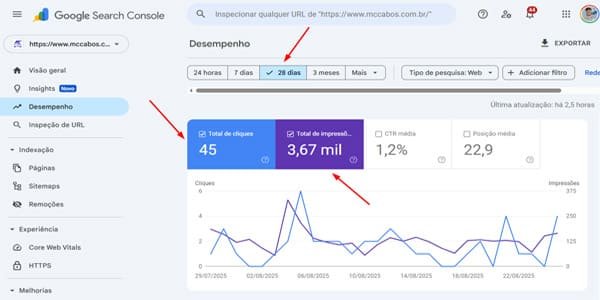
Images created with AI for illustration purposes only
When it's worth looking for SEO consulting for businesses
The problem isn't always easy to identify. Sometimes the website gets little traffic because the technical foundation is poor. In other cases, the structure is actually fine, but the content doesn't cover the right search intent. There can also be cannibalization between pages, a lack of topical authority, or no real growth strategy.
This is where SEO consulting for businesses becomes valuable. It helps diagnose the situation more clearly and keeps the business from continuing to invest in scattered actions that don't build consistent results.
What a professional analysis usually looks at
A well-run consulting engagement usually looks at:
- website structure
- content quality
- semantics and search intent
- technical issues
- internal links
- current rankings
- competitors
- priority opportunities
- commercial clarity of the pages
In practice, this cuts down on guesswork. Instead of making random adjustments, the business starts to understand what's really holding back its growth on Google.
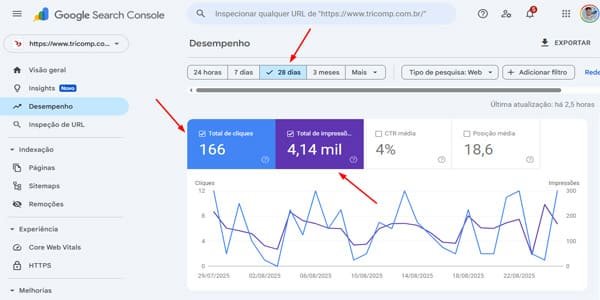
Images created with AI for illustration purposes only
Being on the first page is about the right visibility, not vanity
There's an important point a lot of businesses learn too late: there's no point ranking for just anything. What matters is showing up for searches that fit the service, the audience, and the stage of the decision.
A website can even gain traffic and still not generate inquiries. That happens when the content attracts the wrong audience or when the page wasn't designed to guide the visitor's decision.
That's why the goal shouldn't just be "being on the first page," but earning qualified visibility. When SEO is treated with that level of maturity, the website stops being just a business card and starts supporting the business's growth. If your business wants to turn its website into a more strategic channel, WebMARFAN works exactly on this alignment between technique, rankings, content, and conversion, with a consultative approach focused on real growth structure.
What's worth doing now if your website isn't performing
The best next step isn't to start changing everything without criteria. The ideal is to begin with an objective read of the current situation.
First, check whether the website has well-defined pages, clear content, coherent titles, and good mobile navigation. Then, look at whether it answers the right searches and conveys trust. Finally, assess whether there's a strategy in place, or just a digital presence with no direction.
In most cases, improving rankings requires fixing the foundation, organizing content, and making more technical decisions than it might seem. When that's done with method, organic growth stops depending on luck.
Frequently Asked Questions About How to Get Your Website on Google's First Page
How can I get my website on Google's first page faster?
There's no serious shortcut based on guaranteed speed. What actually speeds up the process is fixing the right priorities early on, such as technical structure, page clarity, search intent, and content quality.
Can a new website reach Google's first page?
It can, but that depends on the level of competition, the quality of the structure, the content strategy, and the consistency of the work. In highly competitive markets, the process tends to require more depth and continuity.
Does creating content alone solve SEO?
No. Content helps a lot, but it doesn't solve everything on its own. If the website has technical problems, a poor architecture, or unfocused pages, rankings can stay limited.
Is it worth hiring SEO consulting even with a good-looking website?
Yes. Design and SEO play different roles. A good-looking website may not be prepared to rank or to convert well. Consulting helps pinpoint these issues more precisely.
Does Google put every website on the first page?
No. Search tends to prioritize pages that best answer the user's intent, offer a good experience, and show more relevance and trust regarding the topic searched.
Ready to turn visits into real rankings?
If you want to understand why your website still isn't ranking well on Google, or what needs to change to compete more strategically, talk to WebMARFAN and find out what your website needs to grow on Google with real strategy.
Ready to turn your website into an authority Google AI can cite? Count on WebMARFAN's experience to guide your strategy toward organic leadership.